May and August
The Balestro del Girifalco is one of Tuscany’s most beautiful medieval festivals, and a true treat for anyone who visit Massa Marittima when it’s on.

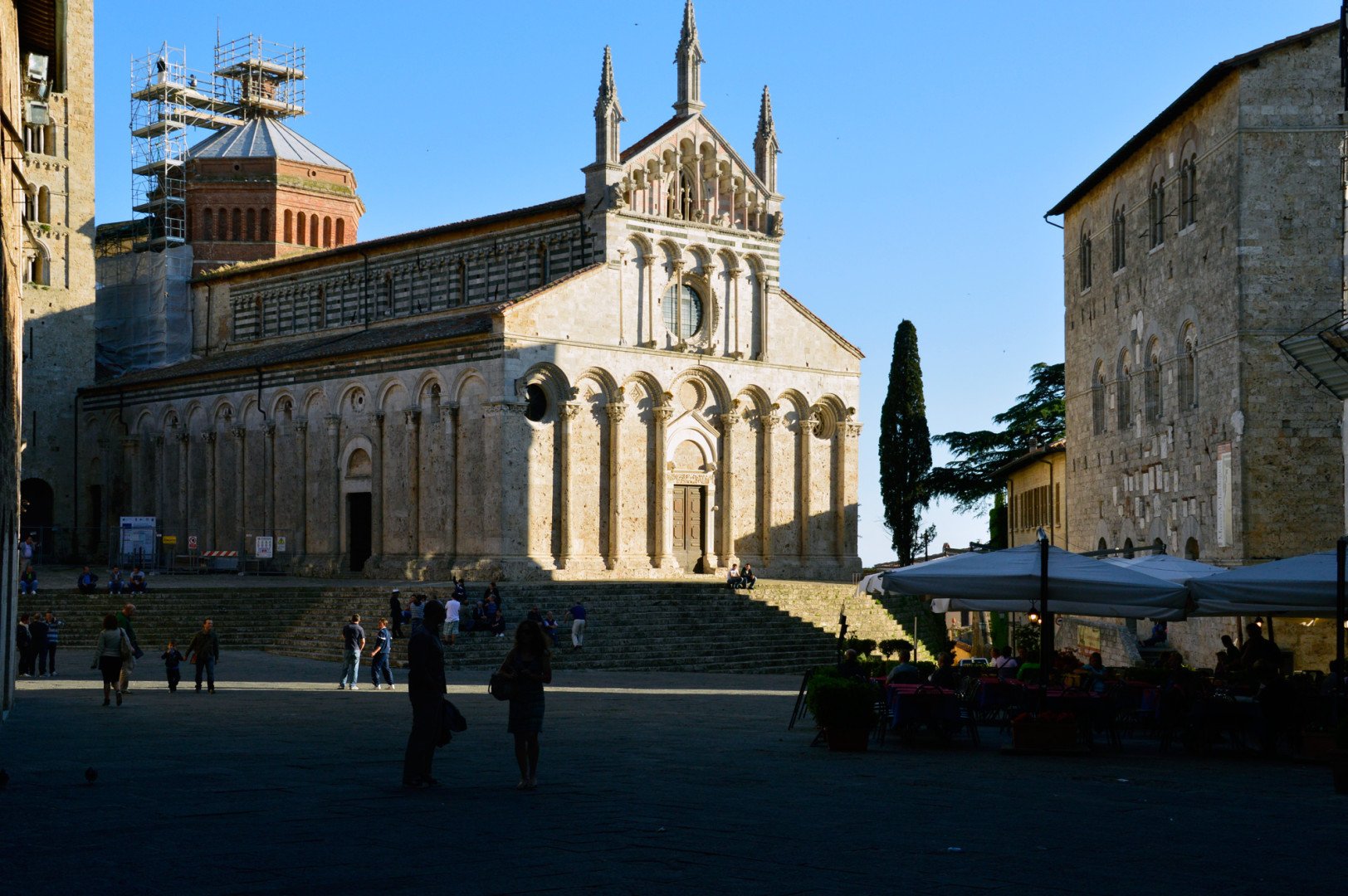
Massa Marittima needs no introduction. A true medieval city, it eclipses almost every other town in the Maremma with its beauty and fame.
For centuries, it has been the centre of the region’s affluence and wielded considerable power not only with its own borders, but in Florence and Siena too. Being so close to Pisa, it attracts more tourists than the rest of the region combined. Even if you have never heard of the Maremma, there is a good chance you’ve heard of Massa Marittima.
But that’s not what draws me to the walled city. From the moment you step into Piazza Garibaldi, you realise that Massa Marittima bears no resemblance to the rest of the Maremma. The humble charm and simplicity of the rest of the region has no place among the grand buildings and magnificent Duomo that surround Massa’s main piazza. Nowhere else in the Maremma can you visit a city that bear such a close resemblance to the artistic splendours of Northern Tuscany. And the tourists can’t get enough of it.
In the history books, Massa Marittima is known as the figlia nobilissima (noble daughter) of Pisa and Siena. Its origins lie somewhere in the High Middle Ages, when the hills around the city were mined for minerals. In the 10th century, the city became the seat of the Bishop of Populonia, but the city’s golden age came in 1225, when it became an independent municipality.
While the rest of the Maremma was fighting under the Aldobrandeschi and the Orsini, Massa Marittima remained autonomous. All the most beautiful buildings in the city were built during this period, when noble families flocked to Massa Marittima for a taste of culture and the high life.
Today, the Massetani begrudgingly accept their place in the Maremma. Like most cities in the north, they don’t have an affinity to Grosseto, which is more than a two-hour drive away. In fact, Massa Marittima see itself as the capital of the Maremma in all but name.
There is nothing understated or modest about Massa Marittima. Its buildings and churches are simply too striking, its culture too well-defined with a wealth of museums, events and festivals. Massa Marittima is renowned for the Balestro del Girifalco – one of Tuscany’s most celebrated historical reenactments. Held in May and August, the archery competition is more than 100 years old.
Massa Marittima has plenty of great restaurants that have taken traditional Maremman fare and turned it into an elegant dining experience. When I last visited, I was amazed at how late the Massetani eat. They wait until the tourists, worn out by a day of sightseeing, are safety tucked into their beds, to reclaim their streets. A languorous dinner is followed by a stroll. Regardless of where they live, the Massetani seem to gravitate towards Piazza Garibaldi, drawn by the music and the lights. Street concerts are met with excitement by adults and children alike, and everyone seems to know each other.
While I sat on the steps of the Duomo, trying, and failing, to blend in, I was completely taken by the beauty of it all. In fact, I remember getting melted gelati all over my shoes because I was too busy staring at the completely relaxed and sociable Massetani. They just oozed sophistication and that European sense of joie de vivre that allows them to let their children stay up late without a care in the world!
Of course, they pay for it the next day, and Massa Marittima is a deserted city until 11am on most weekends. I had to leave the city early and was amused to no end by the fresh and eager tourists itching to see the beauty of the city and the bleary-eyed locals who begrudgingly stumble into my cafe for a very late morning coffee and pastry.
May and August
The Balestro del Girifalco is one of Tuscany’s most beautiful medieval festivals, and a true treat for anyone who visit Massa Marittima when it’s on.
November in Tatti
Over one November weekend, this town celebrates everything there is to love about the Maremma in winter.